
ABUNA KAMAL FARAH – IN MEMORIAM
Henry Ralph Carse
The mystery of living and dying, and the promise of new life, are enfolded in the love of Jesus Christ. This is the simple and profound faith that you, dear Kamal, have embodied in yourself and shown to me, in your life and in your death. You have been a teacher to me, a guide, a pilgrim companion, a mentor, a friend and a brother. Now you are gone, and I am silenced by grief. My head can’t register your absence, and my heart aches with loss. And still, I hear you say, in your low and steady voice, with your half-smile: under it all, the mystery of our living and of our dying is cradled in divine arms – the arms of Christ.
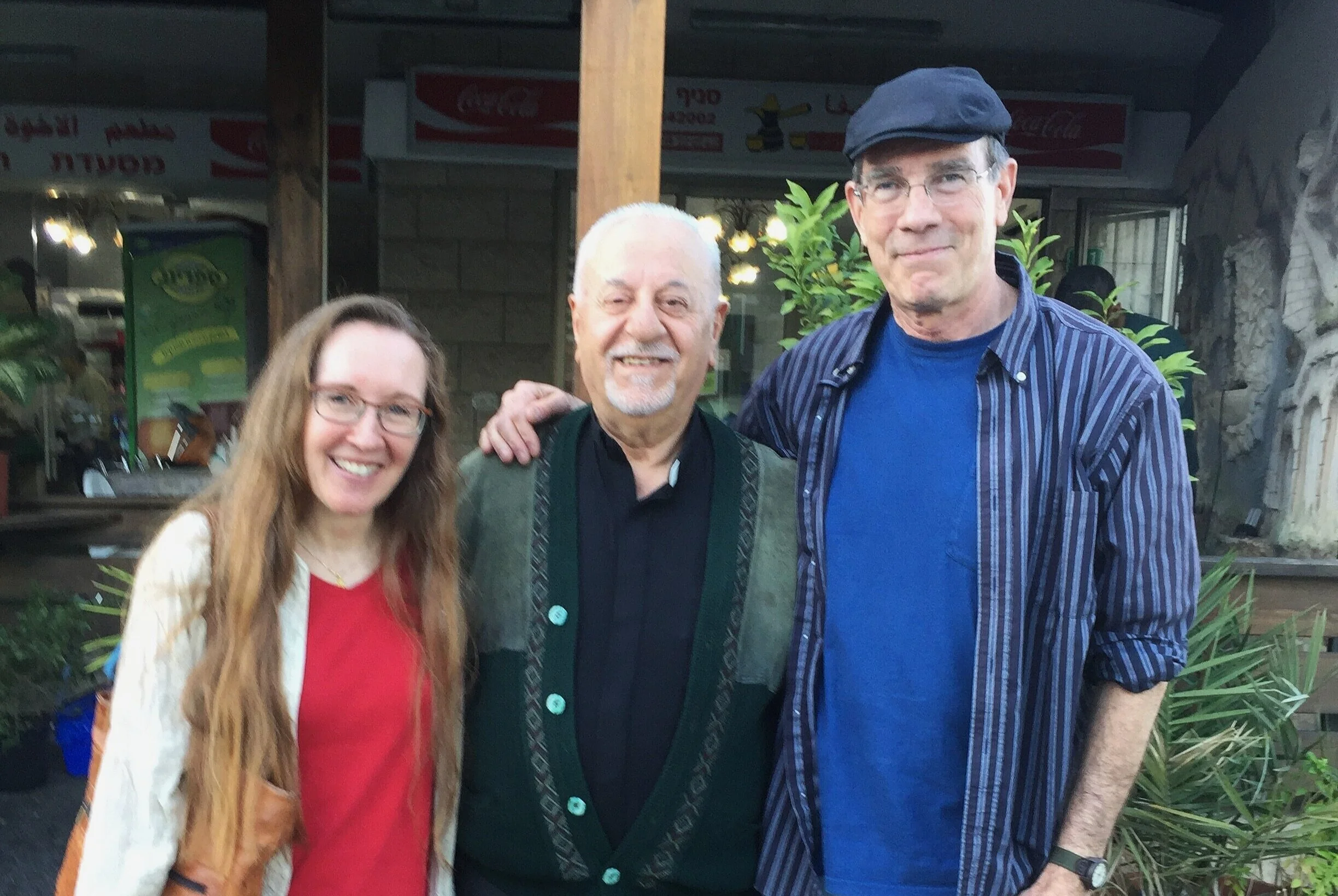
We walked together along the dusty roads of Galilee, sitting with our pilgrim friends in the shade of the olive trees overlooking the glimmering inland sea. We sauntered through the spice markets of Nazareth and the Old City of Jerusalem. I noticed, with a strange feeling, that you always seemed most happy walking the Way of the Cross. Your face was radiant, as you led all of us in prayer and in the practice of intentional presence, amid the hubbub of thousands of bodies and souls living their daily lives around us, even as we remembered the dying journey of our Teacher. Now I understand your happiness. There is no joy greater than standing where you can hear and feel the mortal truth, unfiltered by theological niceties. There is no peace like the peace of faith in the present moment, no matter how chaotic, hard and painful that moment is.
We trekked through eastern deserts together. Under starry skies, around glowing campfires, your laughter rang out unfettered, your deep, warm, earthy chuckles cracking the silence of sandstone and granite. Ancient caravans – a thousand camels long - passed in our imagination. As we looked on in wonder, merchants and saints and sinners and adventurers of long ago spotted your lantern, and came to our encampment. They were drawn by your knowledge of history, your creative mind, and most of all by your irresistible good humor. We shared stories and gossip, and our crisp unleavened bread, with John the Baptist, with Herod the Great, with the Essenes, with Mary Magdalene, and with all the holy scapegoats of time and space. The stars wheeled over us. Everyone agreed that it was best party ever.
Our shared teaching rhythm was a joy to behold. We taught seminars together, always dancing and pilgriming around the spiritual landscapes of Jesus, of the Gospels, of interfaith traditions, of mystical insights. We delved into old texts, explored the spaces between the lines, chanted in call and response the cadences of Aramaic and Hebrew and Greek. We were a great team. Our pilgrim students were always on a theological rollercoaster and never knew what “hoopla!” was coming. My postmodern translations and a/theological non-sequiturs were occasions for oohs and ahs. But, oh, dear Kamal, it was when you spoke quietly that the mind’s world stopped. Almost inaudible, your off-the-cuff remarks would make the tops of heads blow off. The simple profound faith that you lived each moment would send scholarly questions scurrying for their bolt-holes. The room sighed, and hearts opened. For you, Jesus was never an object of study or even a hoped-for subject of search. He was always, everywhere, a delightful and beloved friend. And so you lived, as you taught, as you spoke, as you thought: kindly, with delight and love. And, above all, with faith.
There is no memory more acute, more vivid, than that of you standing in the ruins of your birthplace, your ancestral village, Bar’am. You are silent, thoughtful, attentive, flanked by the moss-covered stone walls, smashed by bombs and covered with wild flowering brambles. When the hustle and scrabble of the pilgrims quietens, when they stand still, their faces raised to your face, questions in their eyes, you still stand unspeaking for long moments, gazing out over the shattered remnants of your memories. And all of us, every one of us, feels it in the pit of our stomach, in the atria of our hearts: the ache of homesickness, a longing for what can never be restored. When you finally tell your story, how as a child you had been sent by your father to greet the soldiers with bread and salt, how you had invited them to your father’s house, how he had brewed sweet coffee for them, given them water from the well, spoken kindly to them – then we begin to understand. The tears come then, welling up hot in our eyes, and we wish your words were not so soft, your memory not so full of forgiveness.
The moment you became a refugee, the moment your home was taken from you and your dearest ones, the moment you lost everything, has become a living moment for us, all these years later. And it is a story and a truth that I cannot shake, cannot forget, and cannot ever understand. The soldiers of then, grown frail now or long dead, are still with us. As are the untold years of grief and loss they brought in their jeeps and in the barrels of their rifles and in the shadow of their warplanes. The wounded villagers of then, your family and cousins and neighbors, elders now, or long gone – they are with us too. And the miracle is this: not for a single instant, as you tell the tale, does your voice dip into bitterness or anger or hatred. Moment after moment, year after year, exile after exile – your answer has always been love.
Kamal, your absence now in this broken world is an emptiness I cannot fill with regret, sadness, bitterness or fear. Only love and faith can fill this echoing place you have carved in my being. So, dear teacher and dear friend, it is my faith I bring you and my love I send you - on the majestic wings of the stork flying high and northward over Galilee, on the quiet wings of the mourning dove, crying from the branch of the lemon tree in your courtyard, on the fragile wings of the exile moth, drawn ever home to your lamp of faith.
I will remember.
Pray for us.