
Matthew 11:16-19, 25-30
16 “But to what will I compare this generation? It is like children sitting in the marketplaces and calling to one another, 17 ‘We played the flute for you, and you did not dance; we wailed, and you did not mourn.’ 18 For John came neither eating nor drinking, and they say, ‘He has a demon’; 19 the Son of Man came eating and drinking, and they say, ‘Look, a glutton and a drunkard, a friend of tax collectors and sinners!’ Yet wisdom is vindicated by her deeds.”
25 At that time Jesus said, “I thank you, Father, Lord of heaven and earth, because you have hidden these things from the wise and the intelligent and have revealed them to infants; 26 yes, Father, for such was your gracious will. 27 All things have been handed over to me by my Father; and no one knows the Son except the Father, and no one knows the Father except the Son and anyone to whom the Son chooses to reveal him. 28 “Come to me, all you that are weary and are carrying heavy burdens, and I will give you rest. 29 Take my yoke upon you, and learn from me; for I am gentle and humble in heart, and you will find rest for your souls. 30 For my yoke is easy, and my burden is light.”
Inclusive Love and Mercy
This Sunday's Gospel illustrates the depth of the Lord's response to faith and trust. Let us read the text again, put it in its context, and derive some important suggestions.
We are in Capernaum, the second town of Jesus, where the leaders of the Synagogue defy Him about many things. Among them, He performs miracles on Saturday, even at the synagogue. He joins tax collectors and eats with them without honoring the elders' precepts that mandate the washing of hands before eating. What can we learn and absorb from this Gospel?
Jesus is inclusive. Nobody is excluded from God's love and mercy. He considers the potential that each person receives from God and promotes it. We see this with Matthew's call. He is hated by the Pharisees because of his tax collecting job, but the Lord sees his potential.
Jesus has transformative power available to those that follow Him. His answers to those who ask or oppose Him are wise, respectful, convincing, decisive and direct. That is how He responds to the Pharisees who criticize Him for gathering with the tax collectors.
His healing covers the physical (the healing of the woman and the daughter in Matthew 9:18-26) the social (the response to the Pharisees VV. 16-27), and the spiritual (mercy rather than sacrifice). Ritual sacrifices that exclude acts of mercy don't please God.
Faith and trust in God's love, mercy and power produce miracles. “For you desire not sacrifice; else would I give it; You delight not in burnt offerings. The sacrifices of God are a broken and contrite heart, O God, you will not despise” Psalm 51:16-17. The Lord would say to us today, "Go and do likewise" Luke 10: 37.
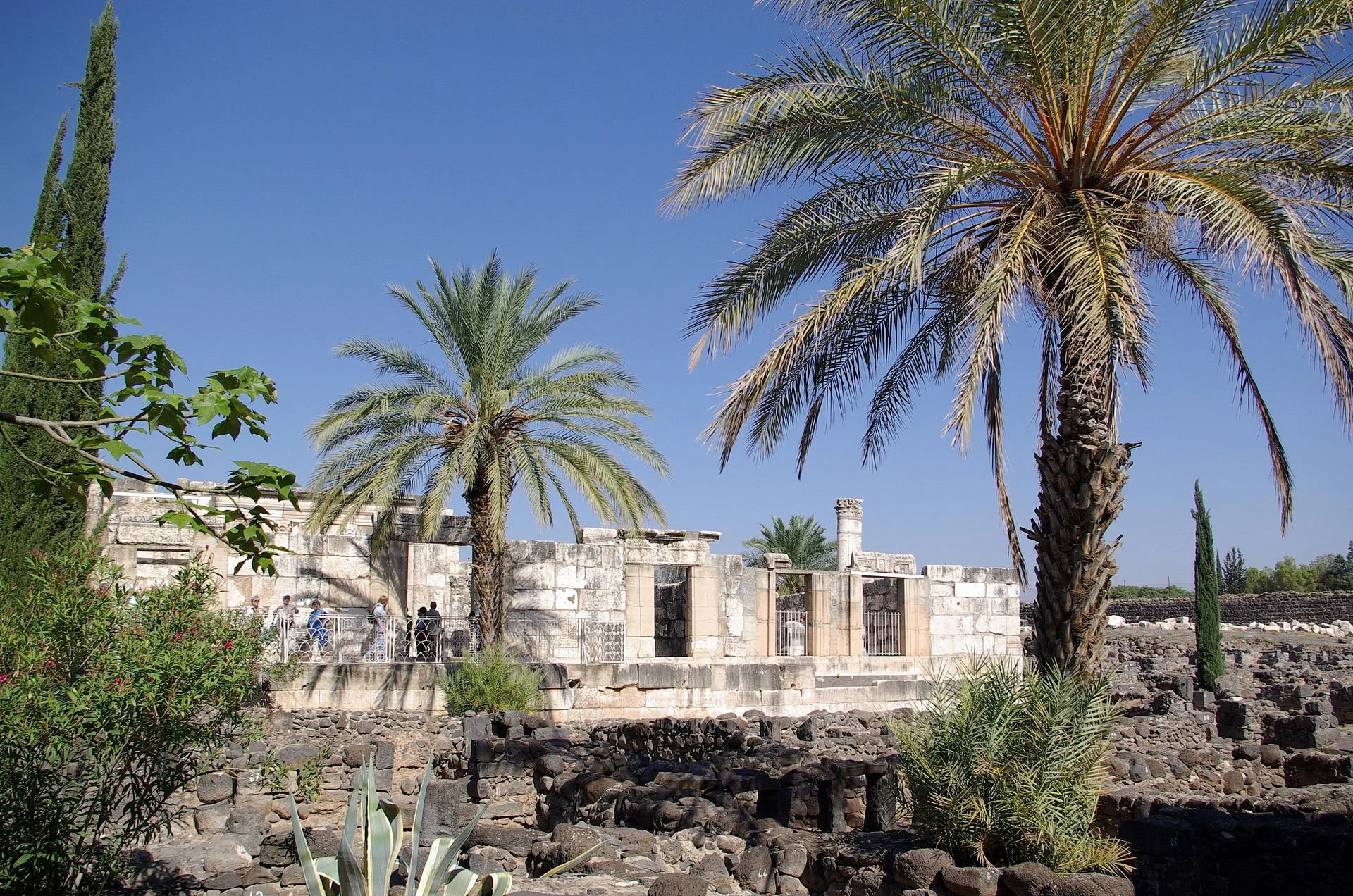
Capernaum synagogue.