
Matthew 9:9-13, 18-26
9 As Jesus was walking along, he saw a man called Matthew sitting at the tax booth; and he said to him, “Follow me.” And he got up and followed him. 10 And as he sat at dinner in the house, many tax collectors and sinners came and were sitting with him and his disciples. 11 When the Pharisees saw this, they said to his disciples, “Why does your teacher eat with tax collectors and sinners?” 12 But when he heard this, he said, “Those who are well have no need of a physician, but those who are sick. 13 Go and learn what this means, ‘I desire mercy, not sacrifice.’ For I have come to call not the righteous but sinners.”
18 While he was saying these things to them, suddenly a leader of the synagogue came in and knelt before him, saying, “My daughter has just died; but come and lay your hand on her, and she will live.” 19 And Jesus got up and followed him, with his disciples. 20 Then suddenly a woman who had been suffering from hemorrhages for twelve years came up behind him and touched the fringe of his cloak, 21 for she said to herself, “If I only touch his cloak, I will be made well.” 22 Jesus turned, and seeing her he said, “Take heart, daughter; your faith has made you well.” And instantly the woman was made well. 23 When Jesus came to the leader’s house and saw the flute players and the crowd making a commotion, 24 he said, “Go away; for the girl is not dead but sleeping.” And they laughed at him. 25 But when the crowd had been put outside, he went in and took her by the hand, and the girl got up. 26 And the report of this spread throughout that district.
Mercy, not Sacrifice
This Sunday, we are invited to accompany Jesus after His preaching and teaching the Beatitudes (Matthew 5), where He starts His healing ministry at Capernaum.
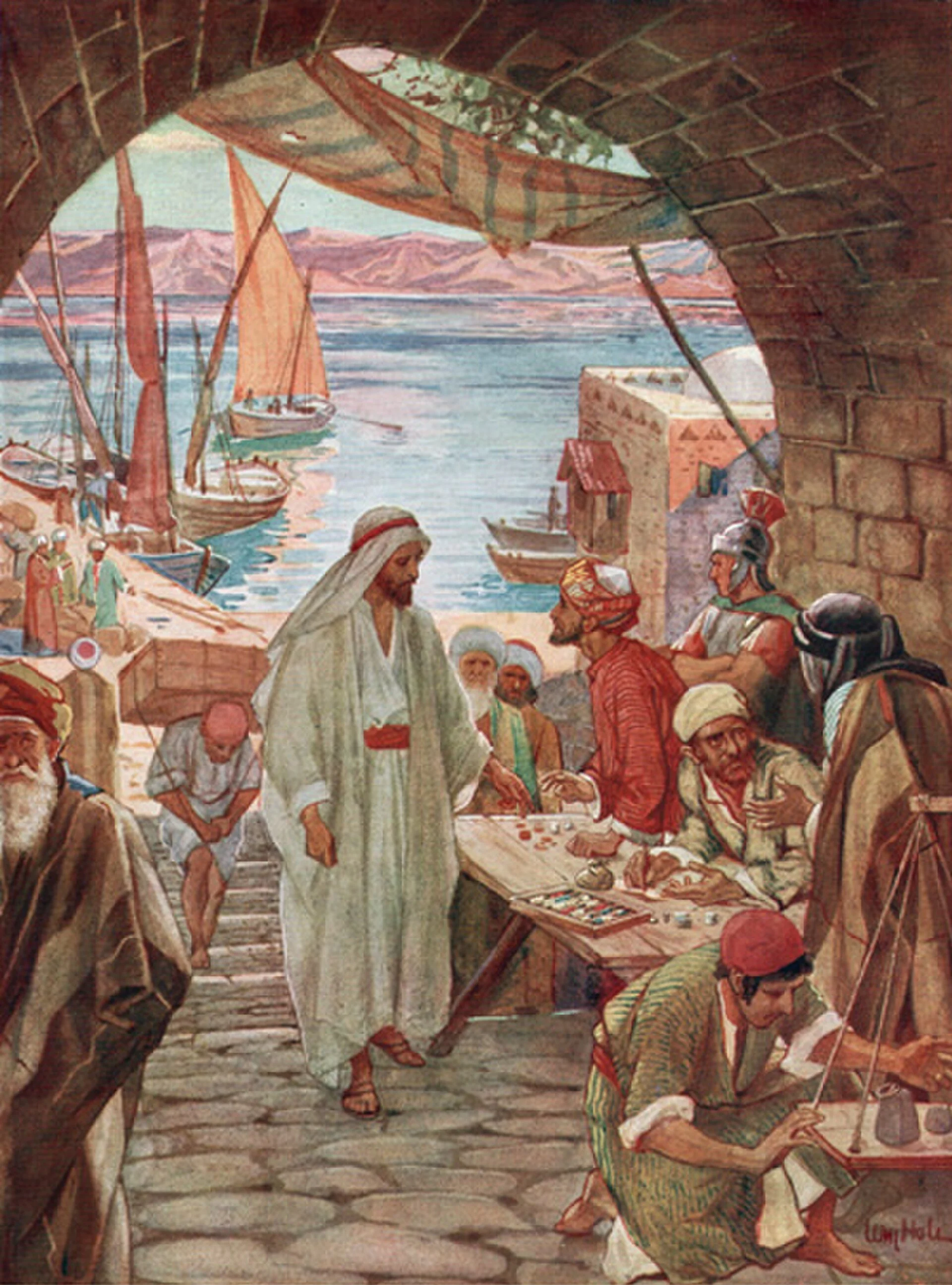
Jesus calls Matthew
One of the first miracles He performed was Matthew's call. As we know, Matthew was a native citizen of Capernaum who worked in Customs as an employee of the Roman Empire. Jesus called him to become a disciple, which means to completely change the nature of his job, leaving lucrative employment to become a disciple of Christ. Matthew's response was immediate. He left the world of finance to immerse himself in the world of self-dedication to God.
Matthew even celebrated this event by inviting his colleagues and Jesus and to a special party. At this point, the Pharisees protested against Jesus because He attended a party with tax collectors, who were considered to be collaborators and traitors.
Jesus' reaction was very clear, "Those who feel well have no need of a physician, but those who are sick" (V. 12). The Pharisees considered themselves righteous. They claimed to know the Bible by heart, fasted twice a week, paid tithes, washed their hands before eating, and offered ritual sacrifices at the main feasts as ordered by the Law. All of these and other acts were acceptable to Jesus, but they don't justify the rejection of others or their defamation and contempt.
Sacrifices offered with a good spirit are pleasing to God and bring blessings, but they are less acceptable and rewarding than acts of mercy. This is why and how Jesus teaches us as He taught the Pharisees and the tax collectors, "I desire mercy, not sacrifice" (V. 13). That reminds us of Psalm 51, "For you do not desire sacrifices, else would I give it; you delight not in burnt offering. The sacrifices of God are broken and contrite hearts, O God you will not despise" (verses 16-17).
How do we apply Jesus' teaching on mercy to our lives and behaviors? May we remember that we are called to follow Him and to respond as Matthew did. Let us be the daughters and sons of Christ who continue to offer sacrifices with contrite hearts and to practice mercy as the Lord asks us to do.
"Blessed are the merciful: for they shall obtain mercy." Matthew 5:7